


Digital Radiography & Ultrasound in Pearland: Fast On-Site Diagnostics for Mysterious Pet Symptoms
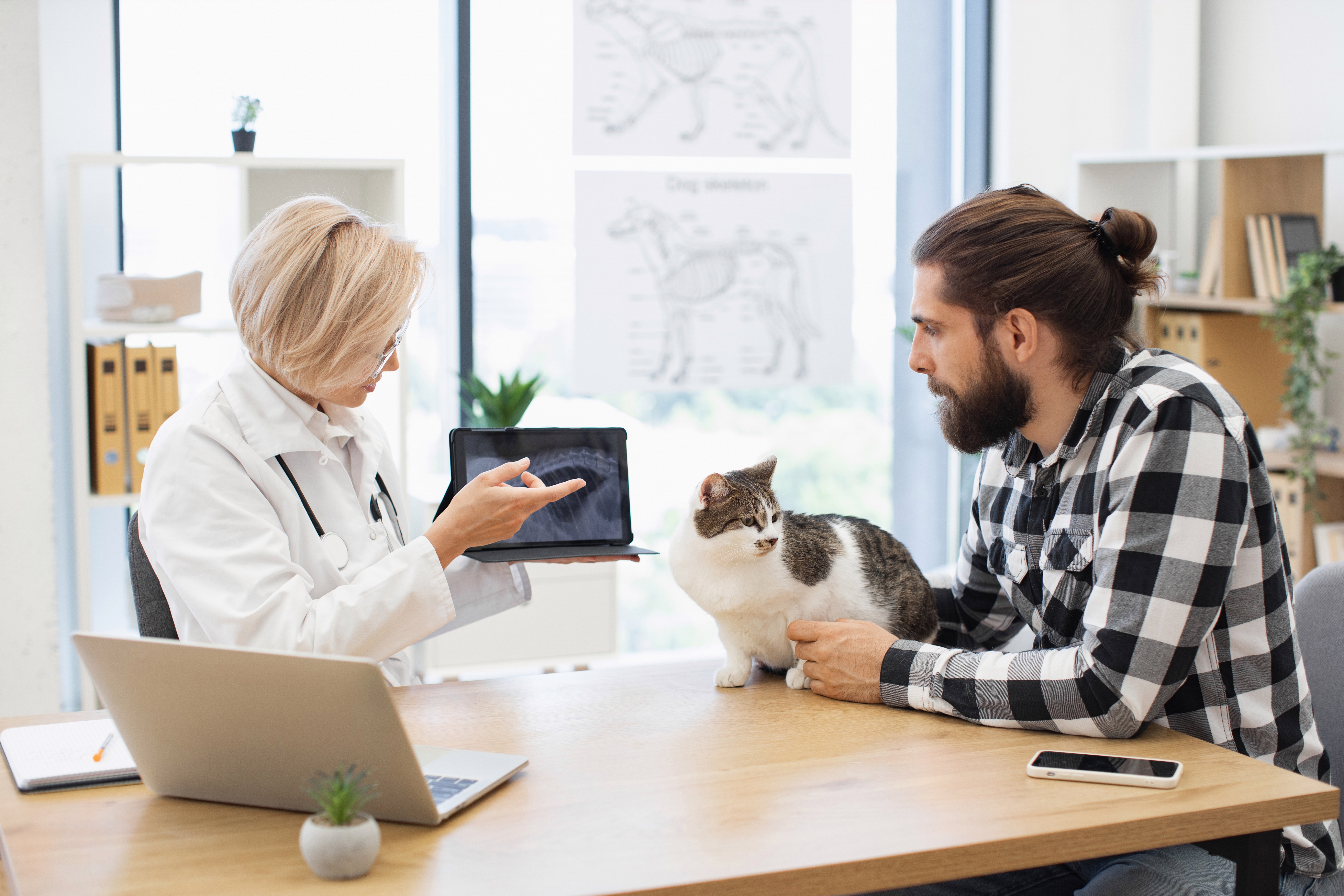
When a dog or cat suddenly stops eating, starts vomiting, seems unusually tired, or develops unexplained pain, the cause is not always obvious from the outside. A physical examination provides important clues, but sometimes we need to look deeper to understand what is happening inside your pet's body.
At Claws & Paws Veterinary Hospital, we offer digital radiography and ultrasound in Pearland to help evaluate a wide range of health concerns. Having diagnostic imaging capabilities available at our hospital allows us to gather valuable information when a pet's symptoms require a closer look.
What Can Digital Radiography Show?
Digital radiography, commonly called digital X-ray imaging, provides images of structures inside the body without surgery. X-rays are particularly useful for evaluating bones as well as the size, shape, and position of certain internal organs.
We may recommend X-rays when a Pearland pet has experienced an injury, is limping, has difficulty breathing, or develops gastrointestinal or other unexplained symptoms. Radiographs can also help us investigate possible fractures, some foreign objects, changes within the chest or abdomen, and other abnormalities.
Because digital images are available for veterinary evaluation without traditional film processing, they can support an efficient diagnostic workup when your pet is not feeling well.
How Does Veterinary Ultrasound Help?
Ultrasound provides a different view of the body. Instead of X-rays, this technology uses sound waves to create images of internal tissues and organs. It is non-invasive and does not use ionizing radiation.
At our Pearland veterinary hospital, ultrasound can provide additional information about the internal structure of organs and soft tissues. Depending on your pet's symptoms, it may help identify or assess conditions involving the abdomen, urinary system, reproductive system, heart, or other areas.
Ultrasound may be useful when evaluating findings such as:
Changes in the kidneys, bladder, or other abdominal organs
Bladder or kidney stones
Fluid within the abdomen
Certain masses or tissue abnormalities
Thickening of the intestinal or bladder walls
Pregnancy
Some heart conditions
Possible foreign material within the digestive tract
An ultrasound finding does not always provide a final diagnosis by itself. In some situations, additional testing, sampling, bloodwork, or other diagnostics may be needed.
Why Might Your Pet Need Both X-Rays and Ultrasound?
Digital radiography and ultrasound provide different types of information, so one does not necessarily replace the other.
X-rays are particularly useful for viewing bones, gas patterns, and the overall size and position of internal structures. Ultrasound can provide more detail about the internal appearance of many soft tissues and organs.
For certain mysterious pet symptoms, using these tools together can give us a more complete picture. Our veterinarians will recommend imaging based on your pet's examination findings, history, and current symptoms rather than automatically performing every available test.
Symptoms That May Lead to Diagnostic Imaging
Pets cannot tell us exactly where something hurts or explain when a symptom began. Owners' observations are therefore an important part of the diagnostic process.
If your pet is sick, tell us about changes in eating, drinking, urination, bowel movements, breathing, activity, or behavior. Also mention any possibility that your pet swallowed a toy, bone, fabric, medication, or another object.
Diagnostic imaging may be considered for persistent vomiting, abdominal discomfort, unexplained weight loss, coughing, breathing changes, limping, trauma, urinary problems, or other concerning symptoms. The appropriate tests depend on the individual patient.
Some symptoms require urgent veterinary attention. Repeated unproductive attempts to vomit, severe breathing difficulty, collapse, significant trauma, seizures, or a severely swollen or painful abdomen should not wait for a routine appointment.
On-Site Diagnostics Can Help Guide the Next Step
When a pet develops an unexplained problem, our goal is to gather enough information to make informed decisions about care. Digital radiography and ultrasound can help us investigate potential causes while avoiding more invasive exploration whenever possible.
Imaging results are considered alongside the physical examination, medical history, and any necessary laboratory testing. From there, we can discuss what the findings mean and whether treatment, monitoring, additional diagnostics, or referral is appropriate.
If your pet has unexplained symptoms that may require diagnostic imaging, contact Claws & Paws Veterinary Hospital at 2556 E Broadway, Pearland, TX 77581 by calling (281) 997-1426 to schedule an evaluation.


Hours
Monday 8:00 am - 6:00 pm
Tuesday 8:00 am - 6: 00 pm
Wednesday 8:00 am - 6:00 pm
Thursday 8:00 am - 6:00 pm
Friday 8:00 am - 6:00 pm
Saturday 8:00 am - 1:00 pm
Sunday Closed
Monday 8:00 am - 6:00 pm
Tuesday 8:00 am - 6: 00 pm
Wednesday 8:00 am - 6:00 pm
Thursday 8:00 am - 6:00 pm
Friday 8:00 am - 6:00 pm
Saturday 8:00 am - 1:00 pm
Sunday Closed

Powered by: 
